

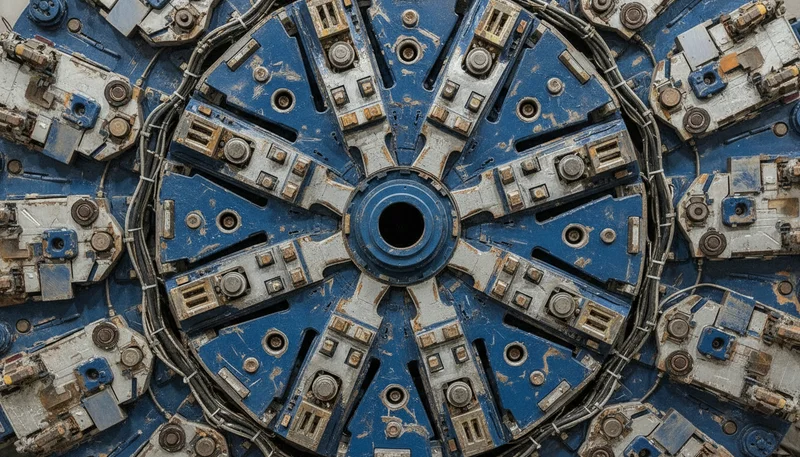
NHSRCL Lowers Second 350-Tonne TBM Cutterhead at Ghansoli for Mumbai Tunnel
National High Speed Rail Corporation lowered the 350-tonne cutterhead of the second tunnel boring machine for the Mumbai-Ahmedabad high-speed rail project at Sawli, near Ghansoli in Navi Mumbai, on 23 May 2026. The 13.6 m-diameter component completes the primary assembly of the machine's main shield.
This second TBM will bore from Sawli towards Vikhroli in Mumbai. The cutterhead of the first machine had been lowered at Vikhroli days earlier, so the two are now positioned to work the same drive from opposite ends. Both go through final assembly and commissioning trials before excavation starts in the first week of July.
The machines belong to the 21 km underground section between Bandra Kurla Complex and Shilphata, the longest continuous tunnel on the 508 km corridor and the stretch that includes India's first undersea rail tunnel. About 16 km of it is to be bored by TBM and the remaining 5 km driven by the New Austrian Tunnelling Method. The TBMs are sized to excavate a single tunnel wide enough for both the up and down tracks rather than twin bores, which is why a cutterhead of this diameter is needed.
Cutterheads of this scale require precision lowering with heavy-lift cranes into a completed shaft, and their arrival on site signals that shaft excavation and machine assembly are done. The 350-tonne cutterhead forms the excavation face of the full TBM, which also includes trailing support gantries, spoil removal systems and segment erection equipment.
Indian Railways separately unveiled the design of the corridor's trainsets on 18 May, with an image installed at Gate No. 4 of Rail Bhavan in New Delhi — the first public view of the white-and-orange rolling stock intended for the route.
The corridor will link Mumbai and Ahmedabad with intermediate stops at Surat, Vadodara and other cities along the western alignment. Design speed is 320 km/h, cutting the journey between the two commercial centres to just over two hours from around seven by conventional rail. The project follows Japanese Shinkansen technology standards and is being built with technical and financial assistance from the Government of Japan.