

India's Mumbai-Ahmedabad High-Speed Rail Reaches 80% Completion, 2027 Opening Confirmed
India's first high-speed rail corridor, the Mumbai-Ahmedabad project, has reached 80% construction completion, with the initial Surat-Billimora section scheduled to become operational in 2027. Railway Minister Ashwini Vaishnaw confirmed the timeline while speaking to reporters in Sanand, Gujarat, on 4 July 2026, noting that the project will subsequently extend in phases to Vapi, Ahmedabad and finally Mumbai.
The construction milestone marks significant progress on India's entry into high-speed rail operations. The phased opening strategy allows revenue service to begin on the completed southern section while work continues on the more complex urban approaches to Mumbai. India will join a small group of nations operating dedicated high-speed rail corridors at speeds above 250 km/h. The Surat-Billimora opening will provide an operational testbed for high-speed rail technology transfer and crew training ahead of the full corridor launch.
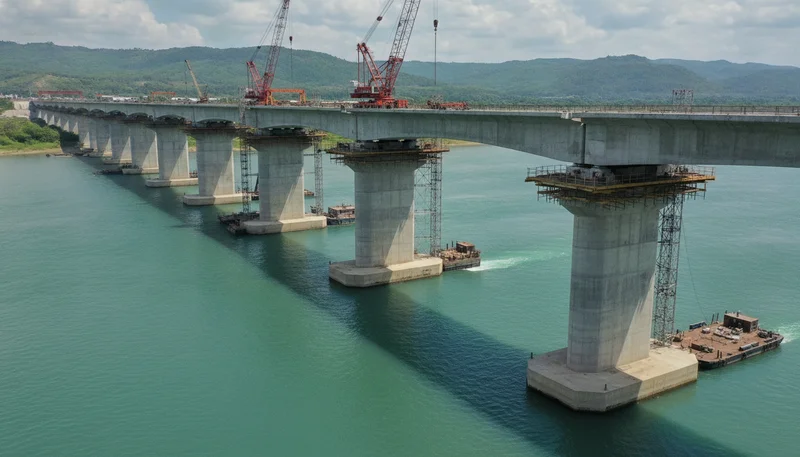
Construction is progressing on foundations, piers, track laying and overhead equipment installation along the alignment, with major river-crossing works underway on the Narmada, Tapi, Mahi and Sabarmati rivers. These river crossings represent critical engineering works requiring specialised foundation and span designs for high-speed operations.
Station construction is advancing at 10 locations along the corridor. Vapi, Bilimora, Surat and Bandra-Kurla Complex stations are in advanced stages, while construction proceeds at pace at Bharuch, Vadodara, Anand, Nadiad, Ahmedabad and Sabarmati. The station works include platforms designed for high-speed train boarding, passenger circulation facilities and integration with existing transport networks. Vaishnaw described construction as progressing at a rapid pace during his remarks to reporters.
The Mumbai-Ahmedabad corridor forms part of India's broader high-speed rail development plan. The 508 km alignment will reduce journey times between India's financial capital and Gujarat's largest city from approximately 7 hours by conventional rail to under 3 hours. The project employs Japanese Shinkansen technology under a bilateral agreement, with rolling stock and signalling systems supplied by Japanese manufacturers. Construction began in 2017 following a framework agreement signed during a state visit.