

Hungary: Government Launches HUF 3,550bn Baross Gábor Rail Plan
Hungary’s government is launching the Baross Gábor Railway Development Plan, a roughly HUF 3,550bn programme over the next 10 years to renew fixed-track public transport, the Hungarian government said on 22 July.
Prime Minister Péter Magyar and Transport and Investment Minister Dávid Vitézy presented the plan at Rákospalota-Újpest station. The government said most funding comes from the European Union.
According to the government release, recovered EU support in the current financial cycle includes HUF 1,800bn for rail. A further HUF 950bn in commitments is earmarked to start projects in the 2028–34 EU programming cycle. The Baross plan also includes a HUF 400bn European Investment Bank loan and a further HUF 400bn on a concession basis.
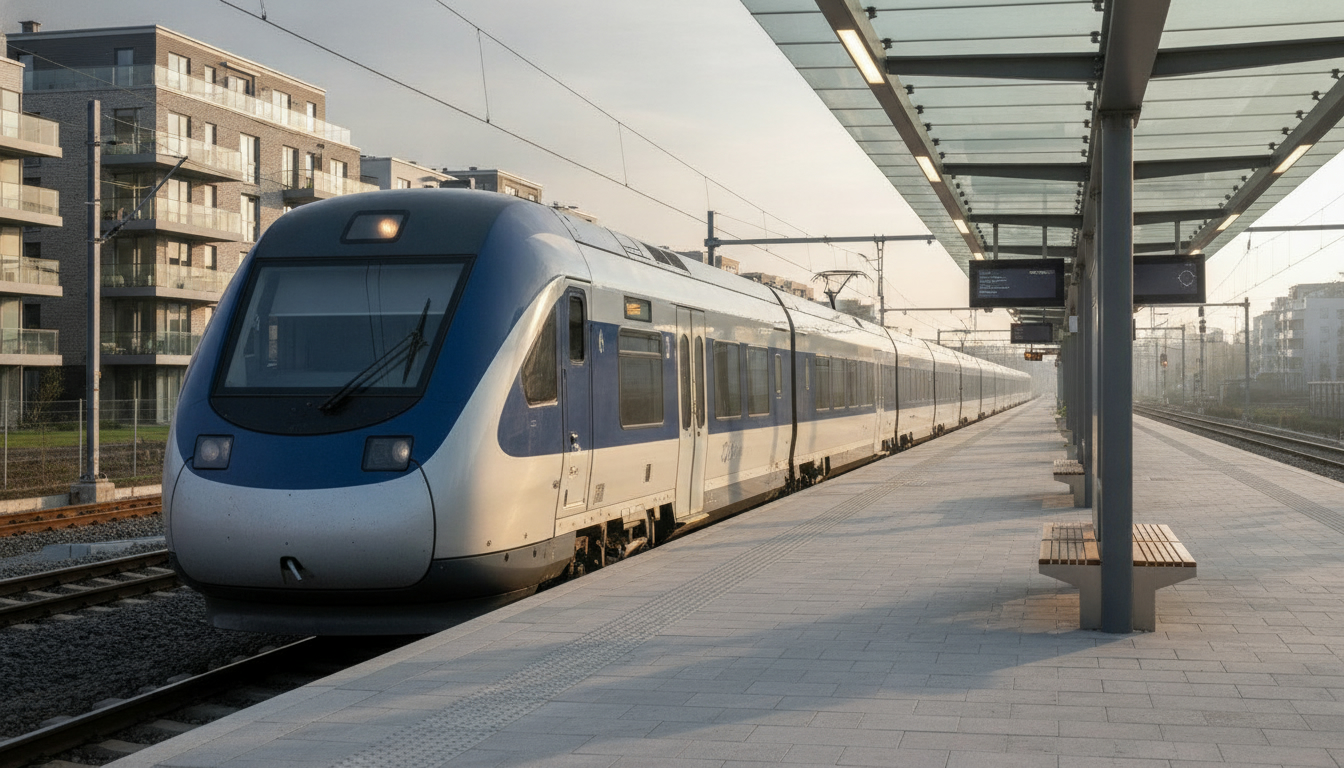
The 10-year programme provides for procurement of 35 new high-capacity InterCity multiple-units for the main IC routes and 42 new HÉV trainsets for the Szentendre, Csepel and Ráckeve lines. The government said it is also preparing renewal of the country’s 10 busiest railway stations.
The release said the long-distance IC network is to be renewed with new air-conditioned, accessible multiple-units with first class and an onboard buffet, serving routes from Budapest toward Győr, Sopron, Szombathely, Veszprém, Zalaegerszeg, Pécs, Kecskemét and Szeged, and on circular IC services toward Miskolc, Nyíregyháza, Debrecen and Szolnok.
On Budapest and its agglomeration, the plan highlights reconstruction, accessibility upgrades and fleet replacement on the Szentendre, Csepel and Ráckeve HÉV lines; renewal of Nyugati station and its surroundings; and reconstruction of the Southern Circular Railway with three new stations. The government also cited comprehensive development of the Veresegyház and Lajosmizse lines, including partial double-tracking and electrification of the latter.
Among larger line projects named in the release are full reconstruction of the worst section of the Budapest–Miskolc line, enabling 160 km/h operation; comprehensive modernisation of the Budapest–Szeged main line, also toward 160 km/h; reconstruction of Székesfehérvár–Lepsény as a continuous double-track 160 km/h route; and electrification and reconstruction of the line from the Zalaszentiván connection toward Nagykanizsa.
The government said the plan also covers nationwide rolling-stock renewal, gradual removal of temporary speed restrictions, station accessibility works, and a unified digital passenger-information and timetable system.