

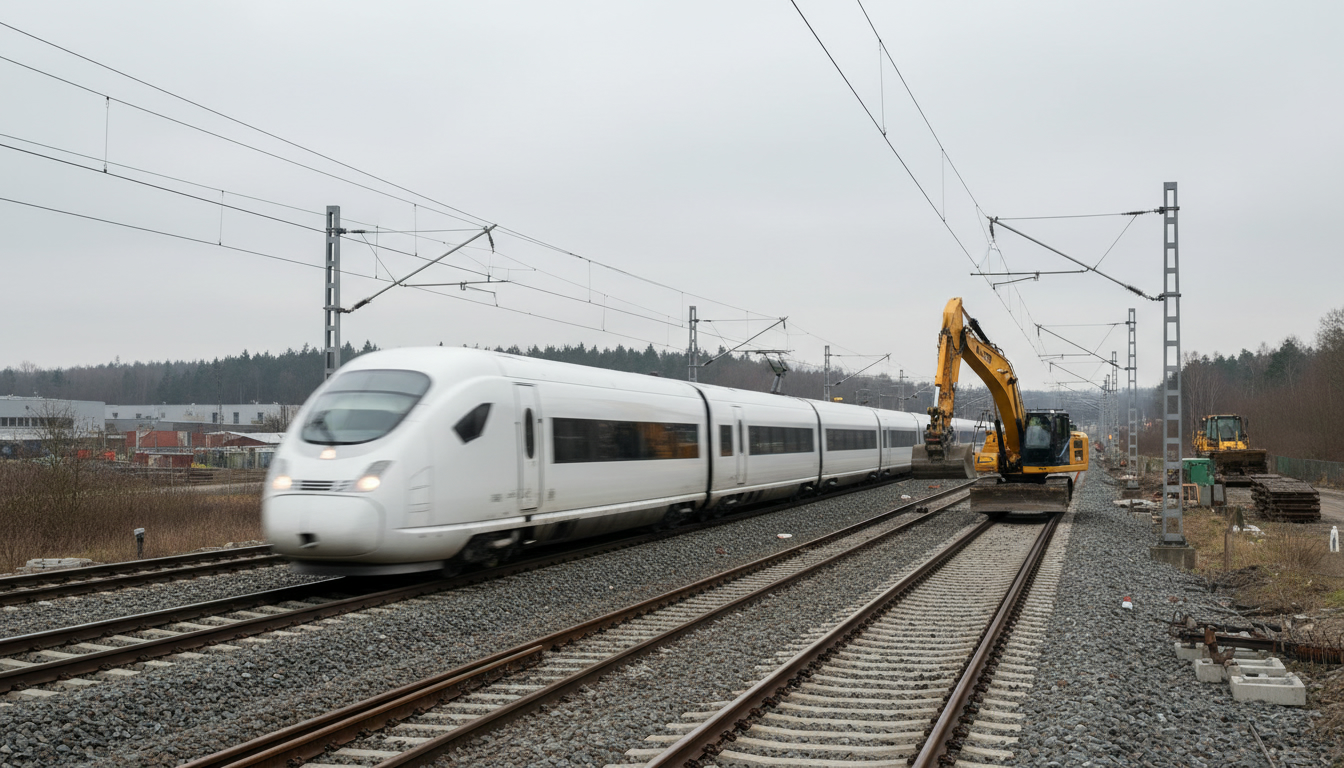
Germany's Rail Upgrade Strategy Falls Behind Its Own Delivery Targets
An analysis by Railway Gazette International finds that Germany's roughly €100 billion rail modernization program, intended to overhaul the country's most congested lines by 2030 and its full core network by 2036, is running well behind its own delivery schedule.
Refurbishment of more than 40 heavily used lines is now expected to take at least five years longer than originally planned, and long-distance punctuality — already among the network's weakest metrics — has continued to worsen even as individual projects are completed. The Riedbahn corridor between Frankfurt and Mannheim, the pilot for Deutsche Bahn's full-reconstruction model, illustrates the gap between ambition and results: planners had expected an 80% cut in disruptions, but the actual improvement came in closer to 40%, and full ETCS signalling on the line was not commissioned until April 2026.
Reflecting the slower-than-hoped progress, Germany has set its 2026 long-distance punctuality target at just 60%, an implicit acknowledgment that the infrastructure overhaul will take years longer to translate into reliability gains. For an industry watching Germany's model as a template for large-scale renewal elsewhere, the shortfall is a caution against assuming rapid returns from similarly ambitious modernization programs.