
Germany's Goldschmidt Joins EU Low-Emission Rail Steel Project
Germany's Goldschmidt group has joined GreenSteel4Rails, an EU-co-funded research project to develop lower-emission rail steel, through its subsidiary Elektro-Thermit, the company said in a 13 July statement. The project has a budget of EUR 5,635,115.90 and runs for four and a half years, until July 2030, with 11 partners from industry and academia across five European countries; the project is EU co-funded under the Research Fund for Coal and Steel.
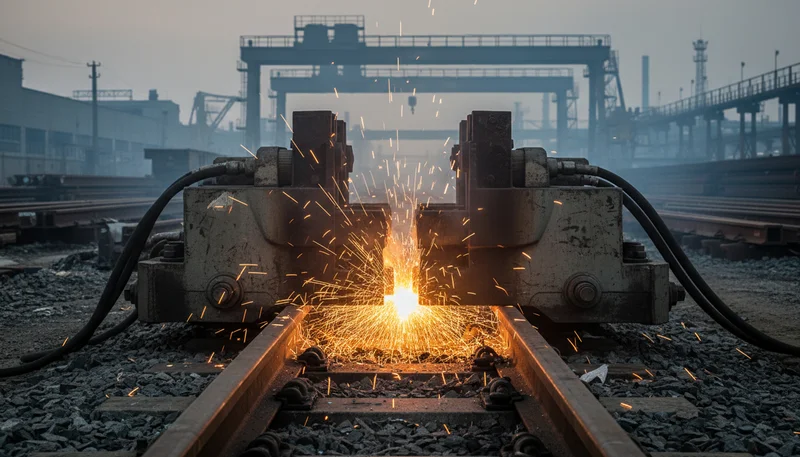
The project's technical goal is to develop and demonstrate new iron-based rail steel grades that are both recyclable and lower in carbon emissions, produced through electric arc furnaces rather than conventional blast-furnace steelmaking -- a lower-carbon route for the freight-rail tracks the new grades are intended for. Elektro-Thermit's specific role is to validate the aluminothermic weldability of these new steel grades, checking weld quality against the railway standards ISO 23300-2 and EN 14730-1. Aluminothermic welding uses a chemical reaction to fuse rail sections in the field, and any new steel grade must be proven weldable to this standard before it can be used on operating networks.
Daniel Liebenthal, who leads the project for Elektro-Thermit, is named alongside colleagues Christof Gassmann and Dr Jorg Keichel from the company's Development and Application Technology team; no direct quotes from the team were included in the statement. Deliverables are described only in general terms -- validation testing and documentation supporting performance approval for the next generation of rail steels -- with no interim milestones disclosed ahead of the project's 2030 conclusion.
Elektro-Thermit, based in Germany, is a long-established supplier of aluminothermic rail-welding technology used on freight and passenger networks internationally.