

India's first undersea rail tunnel advances with second TBM launch
India's inaugural undersea railway tunnel reached a new milestone on 18 July with the launch of a second tunnel boring machine (TBM) at Sawli (Ghansoli), boring toward Vikhroli on the Mumbai–Ahmedabad high-speed rail corridor.
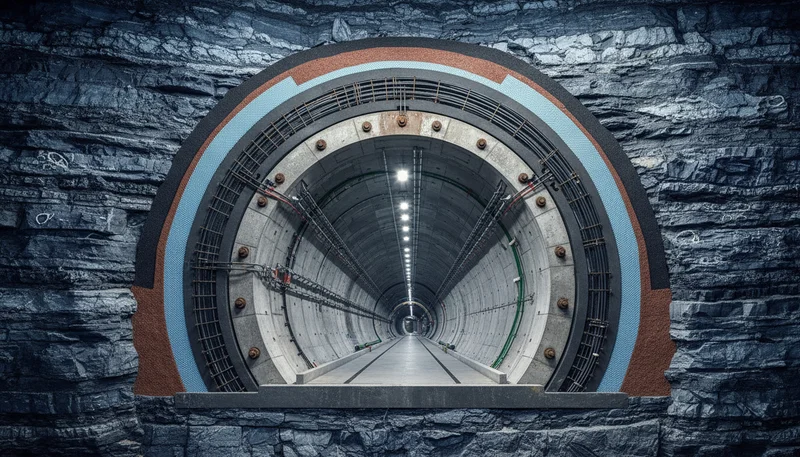
The tunnel is a single-tube structure roughly 13 metres in diameter, wide enough to carry both the up and down high-speed tracks within one bore rather than two separate tunnels. Of its approximately 21 km length between Bandra Kurla Complex (BKC) and Shilphata, 7 km passes beneath Thane Creek — the first undersea rail crossing built in India.
Two giant TBMs are excavating a combined 16 km of this alignment; the remaining 5 km was already completed using the New Austrian Tunnelling Method (NATM). The first TBM began boring from Vikhroli toward BKC on 5 July. The second, now launched at Sawli, is boring toward Vikhroli, including the 7 km stretch beneath Thane Creek.
Because the tunnel is a single large-diameter tube rather than parallel bores, each machine is excavating a separate section of the same tunnel, not a separate tube of its own. Once complete, the two TBM-driven sections will join the earlier NATM segment to form the continuous BKC–Shilphata alignment.
Thane Creek's undersea crossing poses a major engineering test for India's first high-speed rail programme. Continuous mechanical excavation through variable subsurface conditions is enabled by the TBM approach, which limits disturbance at ground level across the heavily urbanised Mumbai metropolitan area.