

Bekasi Train Collision Kills 14, Injures 88 in Indonesia Safety Crisis
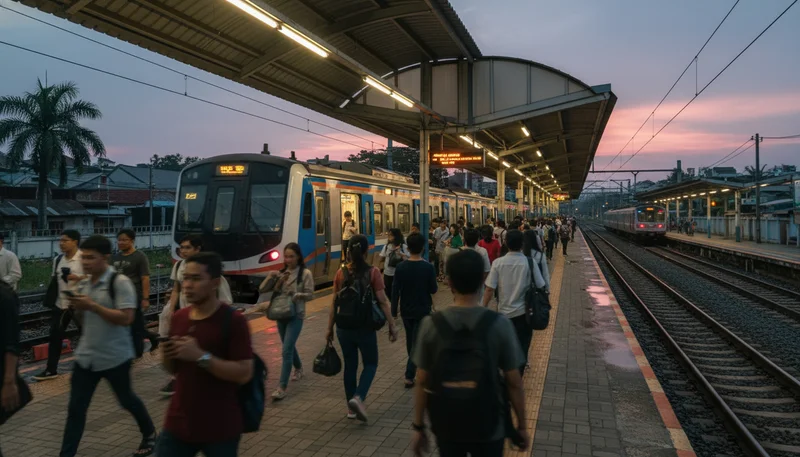
A long-distance train collided with a stationary commuter service at Bekasi Timur Station in West Java on April 28, killing 14 passengers and injuring 88 others. The accident occurred at approximately 8:50 p.m. local time when the intercity service struck the rear of the stopped commuter train.
The collision exposes critical safety gaps in Indonesia's rapidly expanding rail network, which has seen significant investment but limited safety modernisation. The incident marks one of the deadliest rail accidents in recent Indonesian history and highlights the urgent need for comprehensive signalling upgrades across the 5,042km national network. Indonesia's National Transportation Safety Committee has launched a full investigation into signal failures and operational procedures.
PT Kereta Api Indonesia operates both services involved in the collision through its extensive Java network, which carries over 300 million passengers annually. The Bekasi corridor serves as a critical commuter link between Jakarta and surrounding suburbs, with trains operating at high frequency during peak hours. Emergency services deployed 15 ambulances and multiple rescue teams to evacuate casualties from the damaged rolling stock.
Indonesia has allocated $40bn for rail infrastructure development through 2024, including the Jakarta-Bandung high-speed line and urban transit expansion. However, safety system modernisation has lagged behind capacity increases, with many sections still relying on manual signalling protocols. The government now faces pressure to accelerate implementation of European Train Control System technology across priority corridors following this incident.